 Whatsapp
 Contact Us







GET CONNECTED
MAIN BUSINESSES
SERVICES
© 2021 HENAN GBCRANES INTELLIGENT MATERIAL HANDLING MACHINERY CO.,LTD.

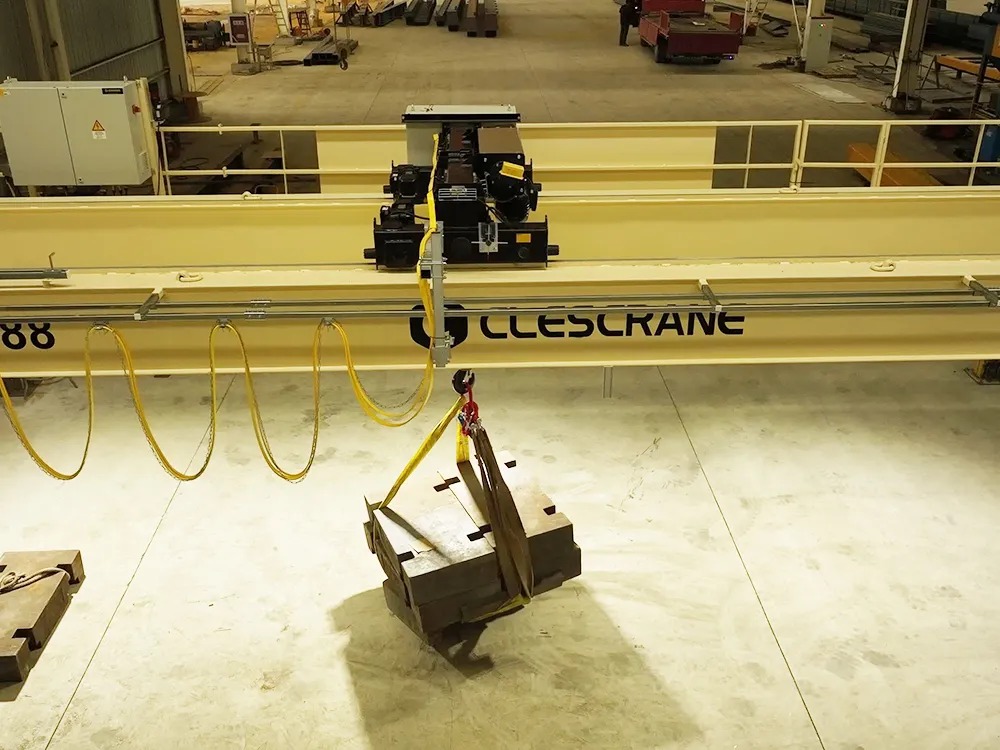
The following OSHA standard covers procedures for safe load handling—such as observing rated load limits, attaching loads, moving loads and testing load limit switches. These standards cover equipment safety, as well as the responsibilities of crane operators in safe crane operation.
Handling the Load
Size of load. The crane shall not be loaded beyond its rated load
Attaching the load
• The hoist chain or hoist rope shall be free from kinks or twists and shall not be wrapped around the load.
• The load shall be attached to the load block hook by means of slings or other approved devices.
• Care shall be taken to make certain that the sling clears all obstacles.
Moving the load
• The load shall be well secured and properly balanced in the sling or lifting device before it is lifted more than a few inches.
• Before starting to hoist the following conditions shall be noted:
• Hoist rope shall not be kinked.
• Multiple part lines shall not be twisted around each other.
• The hook shall be brought over the load in such a manner as to prevent swinging.
• During hoisting care shall be taken that:
• There is no sudden acceleration or deceleration of the moving load.
• The load does not contact any obstructions.
• Cranes shall not be used for side pulls except when specifically authorized by a responsible person who has determined that the stability of the crane is not thereby endangered and that various parts of the crane will not be overstressed.
• While any employee is on the load or hook, there shall be no hoisting, lowering, or traveling.
• The employer shall require that the operator avoid carrying loads over people.
• The operator shall test the brakes each time a load approaching the rated load is handled. The brakes shall be tested by raising the load a few inches and applying the brakes.
• The load shall not be lowered below the point where less than two full wraps of rope remain on the hoisting drum.
• When two or more cranes are used to lift a load one qualified responsible person shall be in charge of the operation. He shall analyze the operation and instruct all personnel involved in the proper positioning, rigging of the load, and the movements to be made.
• The employer shall insure that the operator does not leave his position at the controls while the load is suspended.
• When starting the bridge and when the load or hook approaches near or over personnel, the warning signal shall be sounded.
Hoist limit switch
At the beginning of each operator's shift, the upper limit switch of each hoist, shall be tried out under no load. Extreme care shall be exercised; the block shall be "inched" into the limit or run in at slow speed. If the switch does not operate properly, the appointed person shall be immediately notified.
The hoist limit switch which controls the upper limit of travel of the load block shall never be used as an operating control.


